Services
Movement Disorders (Parkinson's, Tremors)
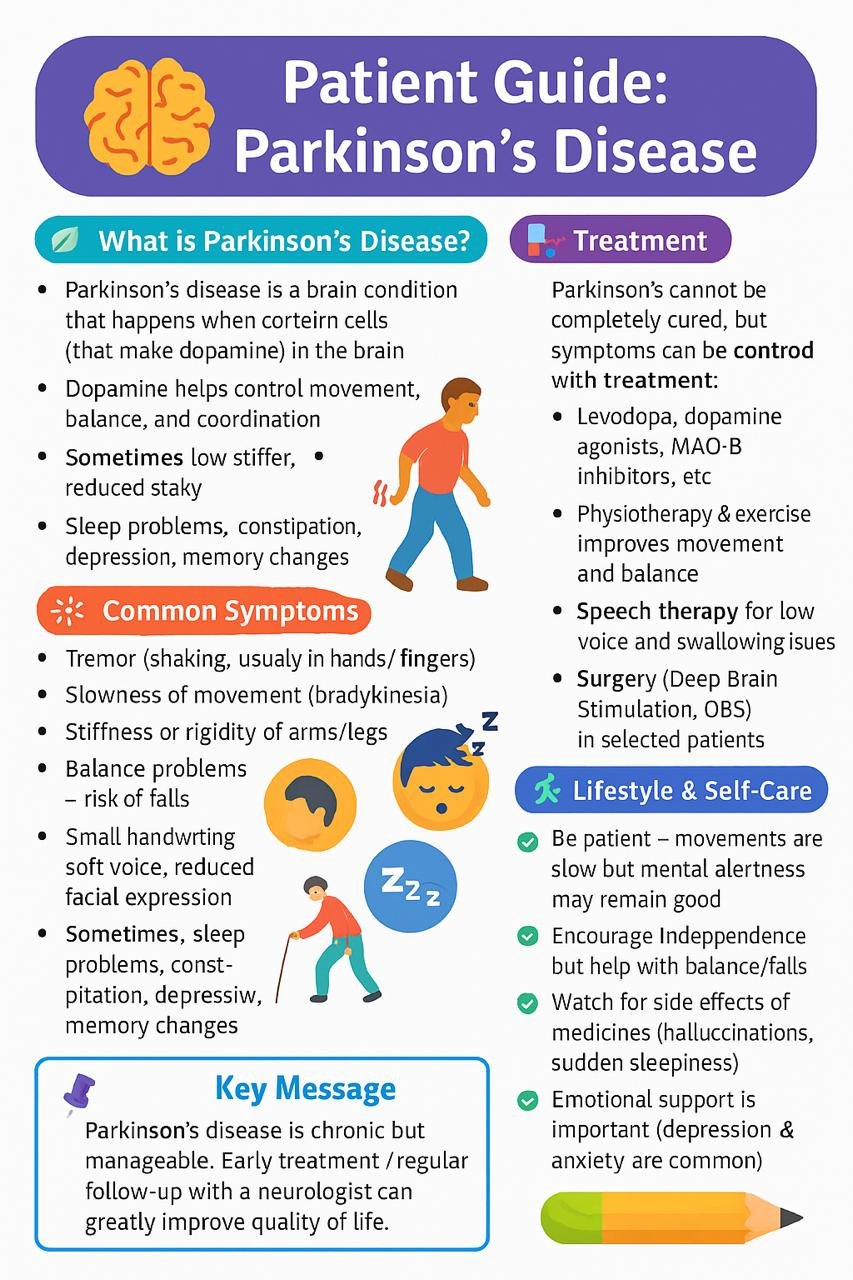
What Is Parkinson’s Disease?
Parkinson’s disease (PD) is a progressive neurological movement disorder caused by the gradual loss of dopamine-producing nerve cells (neurons) in a part of the brain called the substantia nigra. Dopamine is a key chemical that helps smooth and coordinate muscle movements. As these neurons die, communication between the brain and muscles becomes impaired, leading to the hallmark movement changes seen in Parkinson’s.
It is the most common form of parkinsonism, a group of disorders with similar movement symptoms.
Treatment & Management